Washington Planting Calendars: Regional Timing Across the State
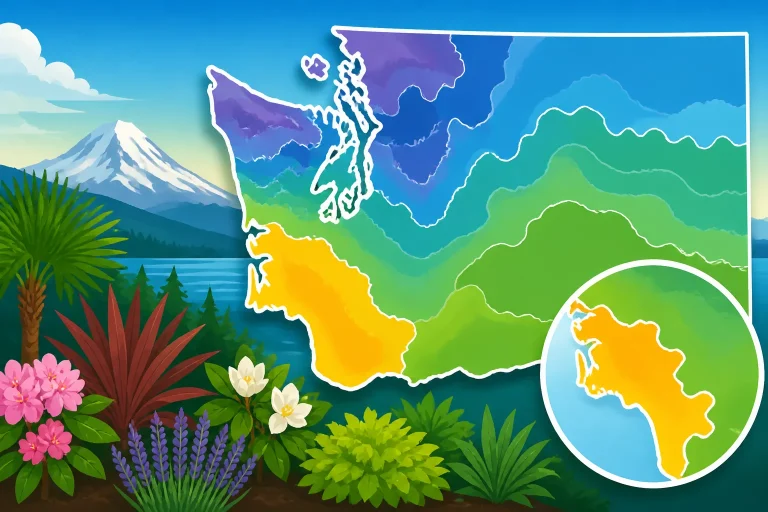
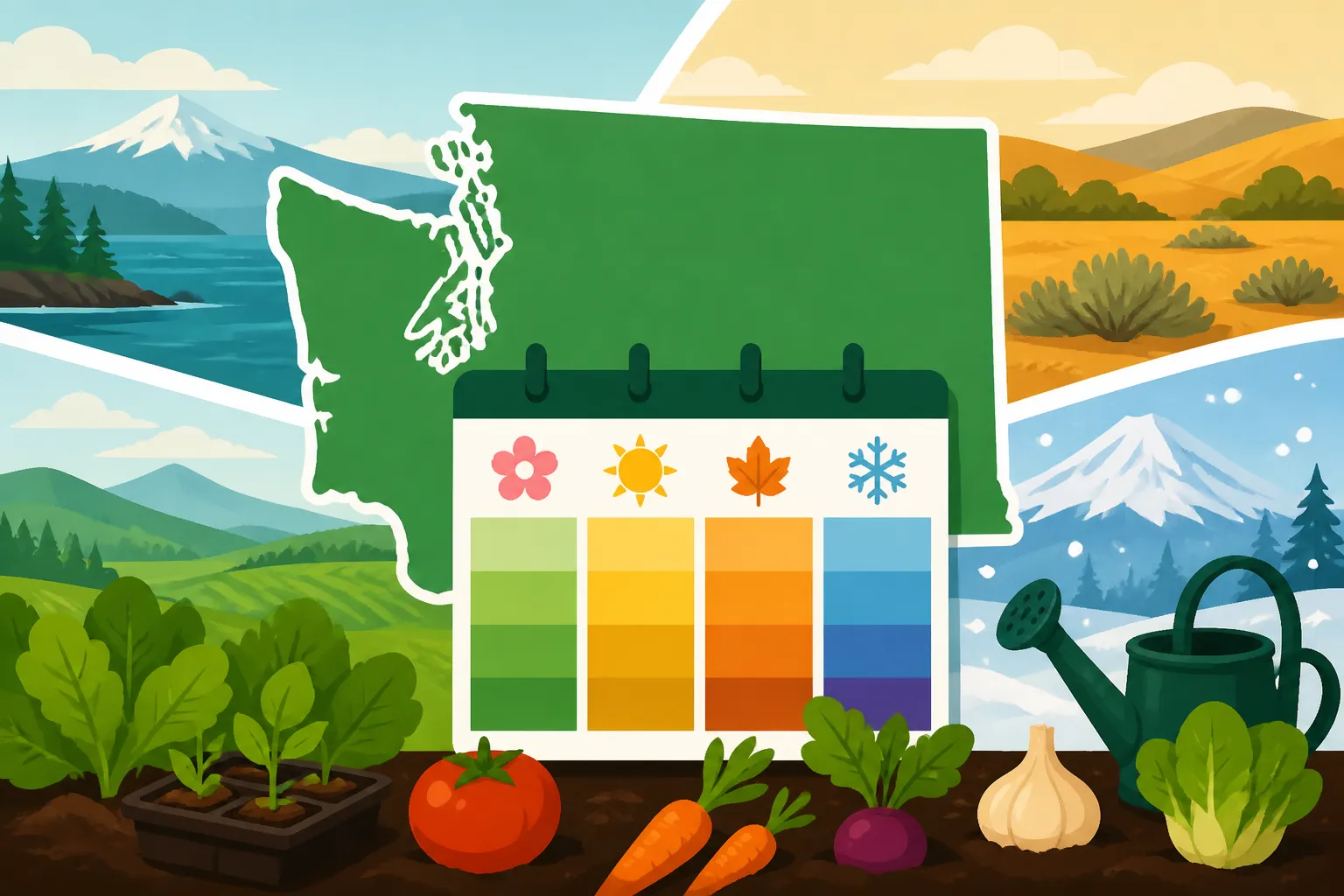
Washington has no single planting calendar that fits every garden. Coastal beds, Puget Sound neighborhoods, inland valleys, dry basins, and mountain foothills can warm at different rates and face different frost risks. A useful calendar is a starting point, not a fixed schedule: match each crop to local conditions, then adjust as the season unfolds.
How to use a Washington planting calendar
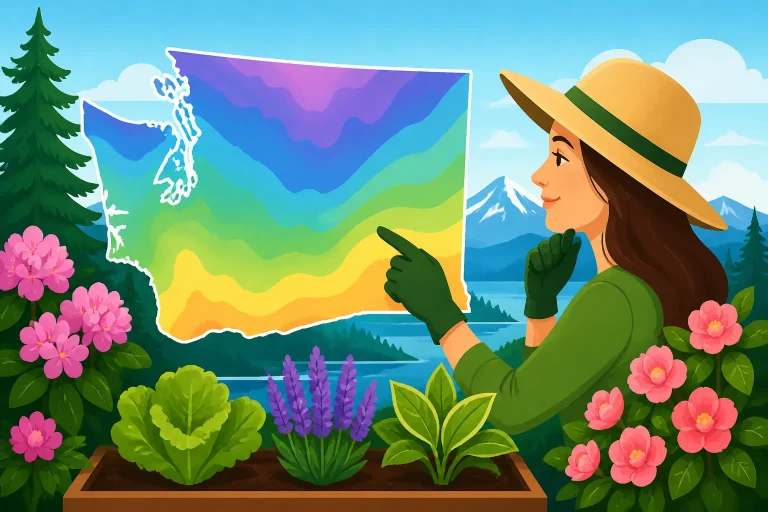
A planting calendar is most helpful when you treat it as a set of suggested windows rather than a list of guaranteed dates. It can help you plan the order of planting, but conditions in your own bed still matter. Soil that is cold and wet may delay a sowing even when the calendar suggests the season is underway; a warm, sheltered bed may be ready sooner than an exposed garden nearby.
According to Washington State University, gardeners can use the Pacific Northwest Gardener’s Handbook, Chapter 7, which lists suggested crop schedules for western and eastern Washington in Table 10 (Artichoke-Turnip); dates can vary by location and microclimate.
Start by identifying the broad region your garden is in, then narrow your estimate using local frost information, soil warmth, exposure, drainage, and the crop’s needs. The same planting plan may work well in one part of a county and poorly in another. A garden near the water, for example, may have different growing conditions from a higher, more exposed site inland.
A calendar also needs to account for what you are planting. Peas, lettuce, and other cool-season crops are not scheduled in the same way as beans, squash, or other crops that need warmer conditions. A date that is reasonable for a hardy crop may be too early for a tender one. For a broader explanation of these differences, see Cool-Season Versus Frost-Sensitive Crops: Sowing Windows.
When you consult a calendar, ask what the recommendation is actually meant to describe:
- Direct sowing: Placing seeds in the garden bed, where they will germinate and grow.
- Indoor starting: Sowing seeds in a protected setting so seedlings can grow before moving outside.
- Transplanting: Setting a nursery plant or home-grown start into its final bed.
- A succession sowing: Planting another small batch after an earlier one, to spread out harvests or replace a finished crop.
- A fall planting: Sowing or transplanting with the remaining season in mind, rather than treating spring as the only planting opportunity.
These are different tasks, and their timing can differ even for the same crop. A calendar that gives one broad window may not tell you whether it refers to seed sowing or transplanting. Check the crop description, seed packet, or a more detailed regional schedule before acting on an entry.
Use calendars alongside observation, not instead of it. Look at the soil, check the forecast, and note how your own beds behave from season to season. If a window has passed, that does not automatically mean you have missed your chance. A later sowing may still be worthwhile, especially if you choose a suitable crop and keep its likely time to maturity in mind.
Why timing changes across the state
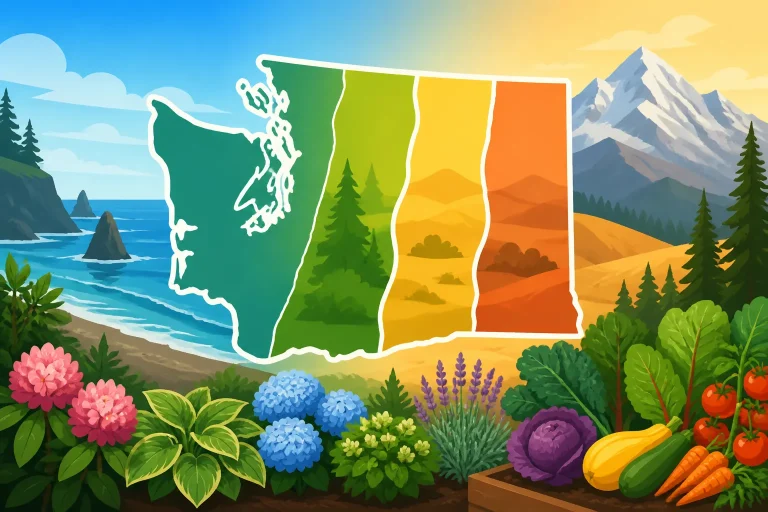
Washington’s growing conditions vary because the landscape and weather vary. Moist maritime areas west of the Cascades, inland areas east of the mountains, and higher-elevation sites do not follow one shared spring or autumn pattern. Even within those broad regions, local terrain and exposure can shift when a bed becomes workable or when tender crops are at risk.
| Garden setting | What can shape planting timing | What to consider |
|---|---|---|
| Coastal and maritime gardens | Cool, moist conditions and exposure to wind or salt air | Watch local soil and weather rather than assuming a warm spell means the bed is ready |
| Puget Sound lowlands | Differences in shelter, elevation, and proximity to water | Compare your garden with nearby conditions that resemble its exposure |
| Inland valleys and basins | Stronger temperature swings, dry conditions, and site exposure | Pay attention to soil warmth, moisture, and forecast changes |
| Mountain foothills and higher sites | Elevation, slope, and cold-air movement | Use a cautious window for tender crops and check local frost information |
| Urban gardens and sheltered yards | Buildings, paving, fences, and tree cover | Notice whether the bed warms early, stays shaded, or collects cold air |
Western Washington
In western Washington, maritime influence and local shelter can affect how a garden warms. A site close to the coast or exposed to wind may behave differently from a sheltered yard farther inland. Soil can remain cool and wet even when the air feels mild, so a sunny afternoon is not always a reliable signal that warm-season crops are ready to go outside.
Some gardens in the Puget Sound region are sheltered by buildings or surrounding vegetation, while others are open to wind or sit in low areas where cold air gathers. These differences can matter as much as the broad regional calendar. Use a local schedule as a guide, then check whether your bed has actually drained and warmed enough for the crop you plan to plant.
For seasonal context, Spring Planting Guide: Waiting for True Warmth in Washington explains why an early warm spell can be misleading. The broad windows in Washington Planting Calendar: Seasonal Schedules by Region can also help organize tasks without treating a regional estimate as a promise for every yard.
Eastern Washington
East of the Cascades, gardens commonly face a different mix of conditions: dry summer weather, greater exposure, and larger temperature swings can all affect planting decisions. A bed that warms quickly may still need careful attention to moisture. Conversely, a cold night can follow a warm daytime stretch, so air temperature alone does not tell the whole story.
Local geography matters here, too. An inland valley, a basin, a higher foothill garden, and a sheltered town lot may not share the same planting window. Look beyond the regional label and consider the site’s elevation, slope, shade, wind exposure, and access to water.
The article Washington Planting Schedules: East vs West of the Cascades offers a useful comparison of broad regional differences. Treat that comparison as a way to orient your plan, then refine it using the conditions in your own bed.
High ground, valleys, and small-scale microclimates
Cold air can settle in low spots, while a sunny slope or a sheltered bed near a wall may warm differently from the surrounding area. A small change in elevation or exposure can affect which plants succeed and how early a bed is ready. These effects are especially important when deciding whether to risk tender crops.
Keep a simple record of what you notice. Note where frost lingers, which bed dries first, where wind is strongest, and which area warms earliest. Over time, these observations can help you interpret a regional calendar more accurately than a broad map or a neighbor’s planting date.
Do not assume that a nearby garden is a perfect comparison. A neighbor may have a different slope, soil texture, drainage pattern, or amount of shade. If you compare planting results, compare the conditions as well as the calendar date.
Plan around frost, soil, and crop needs
Planting decisions are not based on a calendar alone. Frost risk, soil condition, crop tolerance, and the intended harvest all matter. A bed can be ready for one crop while still being unsuitable for another.
Frost is a risk, not a fixed appointment
Frost dates are useful for planning, but they describe likelihood rather than a guaranteed last or first frost. Weather varies from year to year, and a garden’s local conditions can differ from the weather station or regional estimate used by a calendar. A sheltered urban bed and an exposed valley garden may experience different conditions on the same night.
Use frost information to plan cautiously, especially for tender crops. A forecast can help with immediate decisions, while a regional calendar helps with the broader seasonal plan. If cold weather is expected after planting, consider whether the crop can tolerate it and whether temporary protection is appropriate. Washington Freeze Dates and Growing Season Lengths and Vegetable Planting Windows and Frost Safety Across Washington provide more detail on using frost information without treating it as a guarantee.
Soil warmth and workable ground
Air can warm before the garden soil does. Seeds need suitable soil conditions to germinate, and plants set into cold, saturated ground may struggle even if the daytime weather seems pleasant. A bed that stays waterlogged is not ready simply because the calendar shows a planting window.
Before sowing, check whether the soil is workable. If it clumps heavily, smears when handled, or holds excess water, wait for it to drain rather than digging or planting into it. Working wet soil can damage its structure and make later cultivation more difficult. In a dry inland bed, the concern may be different: the surface can dry quickly, so seeds may need consistent moisture to establish.
For a warm-season crop, soil warmth is especially important. Waiting until the bed has warmed can be more useful than following a date that was developed for a different site. A soil thermometer can help you compare conditions over time, but the crop’s recommended germination or transplant conditions should still guide your decision.
Match the planting method to the crop
Direct sowing is a good fit for crops that establish well in place or do not benefit from being moved. Starting indoors can give a crop a head start, but it also requires attention to light, watering, and the transition outside. Transplants can save time in the bed, but they need to be healthy and acclimated before planting.
Do not assume that an indoor start should be moved outside as soon as it has leaves. Plants grown under protected conditions may need a gradual transition to outdoor light, wind, and changing temperatures. Pacific Northwest Spring Planting: When to Start Seeds and Transplant covers the decisions involved in starting and moving seedlings.
The best method is not always the earliest method. Starting too soon can leave a plant waiting in a small container or growing under weak light. Direct sowing too early can leave seed in cold or saturated soil. Choose a method that fits both the crop and the conditions you can provide.
Give the season enough room to finish
A crop’s calendar window is only part of its timing. Consider how long it may take to reach harvest, whether conditions are likely to slow growth, and how much season remains before colder weather returns. A sowing that is reasonable in a long, mild season may be a poor bet in a shorter or more exposed one.
Read seed-packet guidance as an estimate, not a guarantee. Growing conditions, variety, soil, and plant health all affect how quickly a crop develops. If you are planning a fall harvest, count backward from the weather risk you expect at your site and allow for the fact that cool conditions may slow growth.
Build a seasonal planting plan
A useful plan is organized around crop groups and garden conditions, not a rigid statewide date. Instead of trying to plant everything at once, divide the season into broad phases. The phases are flexible: they may start earlier in a sheltered garden and later in a colder or wetter one.
Early-season crops
Cool-season crops can be a good fit while temperatures are mild. Depending on the crop, these may include peas, leafy greens, and some root vegetables. They still need suitable soil and moisture. A crop that tolerates cool air may not thrive if its seed sits in waterlogged ground or if seedlings are exposed to harsh conditions.
Choose crops with the conditions you actually have. If part of the bed is shaded or slow to drain, do not treat it like a warm, sunny seedbed. Work from the most reliable planting area first, and use the rest of the bed when its conditions improve.
Warm-season crops
Crops such as tomatoes, peppers, beans, squash, and cucumbers generally need warmer conditions than hardy spring crops. The exact timing depends on your site and the crop, so avoid setting a statewide date as the signal to plant. Check for appropriate soil warmth, a suitable forecast, and a bed that is no longer cold and saturated.
If an early warm spell arrives, use it to assess the site rather than rushing to plant every tender crop. A few warm afternoons do not guarantee that cold nights are over. A protected growing space or temporary cover may help in some situations, but it does not replace matching the crop to the conditions.
Succession sowing
Planting all of a crop at once can result in more produce than you can use at one time, followed by a gap in harvest. Succession sowing means making additional sowings as earlier plantings develop or are harvested. It can spread production across a longer period, particularly for crops that mature quickly or do not hold well in the garden once ready.
Keep each sowing modest enough to manage. Record what you planted and when, along with how quickly it grew. If the later sowing struggles in heat or cold, adjust the next one rather than repeating the same schedule automatically. For more on this approach, see Staggering Garden Sowings Every Two Weeks for Steady Harvests.
Fall and winter planning
Fall planting is not simply spring planting run in reverse. Days shorten, soils may cool, and the time available for a crop to mature becomes more limited. Select crops suited to the conditions and plan around the likely end of the growing season at your site. A crop that is quick to grow may still fail if it is sown too late to establish before cold weather.
If you want winter harvests, think ahead while the bed is still productive. Decide which space can be cleared, which crops can remain in place, and whether protection will be practical. Regional resources such as What Vegetables Can You Still Harvest in Washington Fall and Winter? can help set expectations for late-season growing.
Fall planning also includes deciding when not to plant. If the remaining season is too short for a crop to establish and mature, use the bed for something more suitable or prepare it for the next season. A calendar can help you make that choice before seed and space are committed.
Choose regional timing for common crop groups
Crop groups help simplify a long planting list. They are not a replacement for crop-specific instructions, but they make it easier to decide which part of the season deserves attention first. The same group can still need different timing in different parts of Washington.
Peas and leafy greens
Peas and many leafy greens are commonly associated with cool-season gardening. They can often be planned earlier than tender summer crops, provided the soil is workable and conditions suit the seed or transplant. In a wet spring, wait for the bed to drain; in a dry location, keep newly sown seed from drying out.
Some greens can be planted in repeated small batches, while others are better suited to a single planting or a particular season. Check the crop’s tolerance for heat and cold. A leafy crop that grows well in cool weather may bolt or become less appealing as conditions warm, so consider how much of it you want ready at once.
Root crops
Root crops are often direct-sown because moving young plants can disturb their roots. Prepare a reasonably fine, stone-free seedbed where possible, and keep the surface evenly moist while seed germinates. If the soil crusts or dries, seedlings may have trouble emerging.
A calendar can tell you when a crop is generally suitable, but it cannot guarantee good root shape. Soil structure, drainage, and careful thinning also affect the harvest. Avoid working wet soil into a hard surface or compacted bed, since roots need room to develop.
Brassicas and other cool-weather crops
Crops in the brassica group include options for more than one season. Their timing depends on the crop, whether you are sowing seed or transplanting, and how much time remains before conditions turn unfavorable. A regional schedule can narrow the window, but the intended harvest period should guide the plan.
These crops can be sensitive to stress during establishment. Choose a suitable site, water consistently, and avoid assuming that a start grown indoors is ready for immediate exposure. If you are planning for fall, give plants enough time to grow before the weather becomes difficult.
Beans, squash, cucumbers, and corn
These crops need warmer conditions than hardy spring crops. Planting into cold ground can delay establishment, while an early outdoor start may be exposed to cold nights. Wait for a suitable local window instead of relying on the first warm spell of the year.
In a short or cool season, focus on crops and varieties that can finish under your conditions. In warmer inland gardens, heat and water management may become just as important as the planting date. A calendar should help you decide when to begin, but it cannot offset unsuitable conditions or inadequate moisture.
Tomatoes and peppers
Tomatoes and peppers are tender crops that need careful timing. A transplant can look ready in its container but still be vulnerable outdoors if it has not been acclimated or if the bed remains cold. Prepare the planting site and watch the forecast before moving plants out.
In western Washington, cool nights can slow growth, so a sheltered, sunny location may help. In eastern Washington, warmth may arrive earlier, but intense sun and dry conditions can demand more attention to water. Either way, a successful start depends on more than the calendar: healthy transplants, suitable soil, and manageable weather all matter.
Adjust a regional calendar to your garden
The most useful calendar is the one you can revise as you learn how your site behaves. A few simple observations can help you make better decisions without trying to predict every weather change.
Make a garden-level record
Record sowing and transplanting dates, but also note the conditions around them. Write down whether the soil was wet or dry, whether the bed was exposed or sheltered, and how the crop performed. Keep the notes specific to each bed, because different parts of a yard can behave differently.
A record can reveal patterns that are hard to notice in the moment. You might see that a sunny raised bed is ready earlier than an in-ground bed, or that a low corner stays cold after the rest of the yard has warmed. These observations do not replace a regional schedule; they help you use it more intelligently.
Check the weather close to planting
A broad calendar helps with seasonal planning, but a short-term forecast matters when a planting decision is near. Pay attention to cold nights, heavy rain, wind, and abrupt temperature changes. The forecast is not a guarantee, but it can warn you that a planned transplanting day may bring unnecessary stress.
If conditions look unsettled, waiting can be the more productive choice. Seedlings held briefly in suitable containers may be safer than plants exposed to a cold snap. Seeds in a prepared bed may also be better delayed until the soil is workable and less likely to stay saturated.
Use protection thoughtfully
Row covers, cloches, and other forms of protection can reduce exposure to some conditions, but they do not make every crop safe in every weather. Covers may need to be secured against wind, and plants still need access to light and appropriate ventilation. A covered bed can also warm differently from an uncovered one.
Choose protection based on the problem you are trying to manage. If the bed is waterlogged, covering it will not fix drainage. If a crop needs warmer soil, a barrier from wind may not be enough. Consider the limits of the material and follow its use instructions.
Revisit the plan when a window passes
If you did not plant during the first suitable window, reassess rather than giving up on the season. Some crops can be planted later, while others may no longer have enough time to mature. Check the crop’s expected development, the conditions at your site, and the time remaining before cold weather is likely.
You can also change the goal. A late planting might be intended for young leaves rather than a full-sized crop, or a cleared bed might be more useful for a cover crop or next-season preparation. A flexible calendar makes it easier to adapt without forcing every original plan to fit.
Keep zone information in its place
Hardiness zones describe winter cold risk for perennial plants; they do not provide a complete vegetable planting calendar. Two gardens that fall in the same zone can differ in spring soil temperature, summer heat, frost exposure, and the length of suitable conditions for annual crops. For a deeper explanation, see Why Hardiness Zones Fall Short for Washington Vegetable Planting Dates.
Use zone information as one piece of context, especially when choosing perennial plants. For vegetables, combine it with regional planting schedules, local frost information, and your own observations. Looking Up Your USDA Hardiness Zone Map in Washington can help with the zone question, while the planting decisions still need to reflect the conditions in the bed.
Frequently Asked Questions
Is there one planting calendar for all of Washington?
No. Regional schedules are useful starting points, but planting windows shift with local weather, elevation, drainage, exposure, and microclimate. Use the calendar closest to your region and adjust it to your garden.
Should I plant when the calendar says to, even if the soil is wet?
Not necessarily. Wait until the bed is workable and drains adequately for the crop. Planting into saturated soil can cause problems that a calendar cannot account for.
Can a warm spell mean it is safe to plant tender crops?
Not by itself. Check the forecast, soil conditions, and the crop’s cold sensitivity. A warm afternoon does not guarantee that nights will remain suitable.
Are hardiness zones enough to plan a vegetable garden?
No. Zones help describe winter cold risk for perennial plants, but they do not capture all the factors that shape vegetable planting dates. Pair zone information with a regional calendar and local observations.
Sources
- Washington State University — Chapter 7: Vegetable Gardening | The Pacific Northwest Gardener’s Handbook: Growing for the Future (checked November 15, 2026)
Disclaimer
This article is for general informational purposes only and does not constitute professional advice. Laws, prices and regulations vary by location and change over time. Consult a qualified professional for guidance on your specific situation. Washington Gardening Guide is not a government agency and is not affiliated with any university extension, state department of agriculture or other government agency.