Understanding Washington Growing Zones from the Cascades to Coast
Washington gardeners can look at a hardiness zone and still be unsure when to sow, transplant, or expect a plant to thrive. The state’s varied climates make that uncertainty understandable: a zone describes winter cold, not every condition a garden faces. Here’s how to use the map as one useful planning tool, while accounting for local weather, exposure, and the needs of the plants you want to grow.
What Washington’s growing zones describe
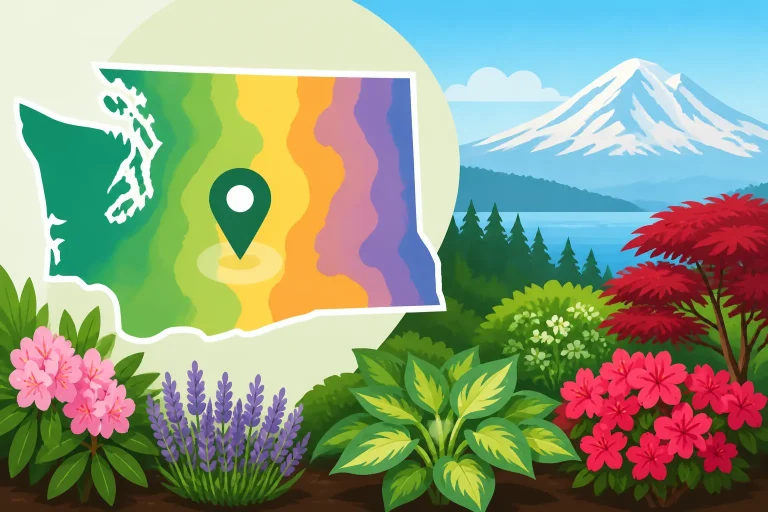
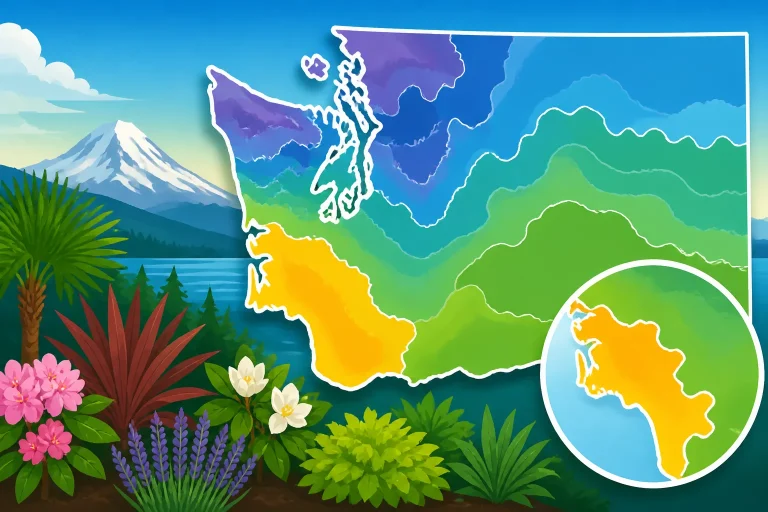
Washington State University says the 2023 USDA plant hardiness map for the state has zones range from 4 -9. That broad spread reflects meaningful differences in winter cold across Washington. A zone can help you judge whether a perennial, shrub, or tree is likely to survive typical winter lows in a location. It is a starting point for choosing plants, not a complete growing calendar.
Plant hardiness zones are based on winter temperatures, so their most useful question is: can this plant generally withstand the cold in this area? They do not tell you when soil will warm enough for a seed to germinate, whether a late frost might damage tender growth, or how much time a warm-season crop has to mature before autumn cold arrives.
That distinction matters because “survives” and “grows well” are not always the same thing. A plant may endure winter but struggle with summer heat, wet soil, dry conditions, wind, or a short stretch of suitable growing weather. A zone label can narrow your choices, but it cannot capture all the conditions that determine how a plant performs in a particular bed.
Use the map as a broad screening tool. If a plant is described as suitable for conditions colder than the ones in your area, it may have a better chance of surviving winter there. If its listed hardiness does not include your area, consider whether the plant can be protected or grown in a container that can be moved. For plants that sit near the edge of their hardiness range, local exposure and drainage become especially important.
For vegetables, zone information is usually less helpful for choosing sowing dates. Many vegetable crops are annuals, and their timing depends on frost risk, soil temperature, daylight, and the crop’s time to maturity. A hardiness zone won’t tell you whether a cucumber start is ready to go outside or whether a fall crop has enough favorable weather left. For a closer look at the limits of this measure, see Why Hardiness Zones Fall Short for Washington Vegetable Planting Dates.
Why conditions differ from the coast to inland areas
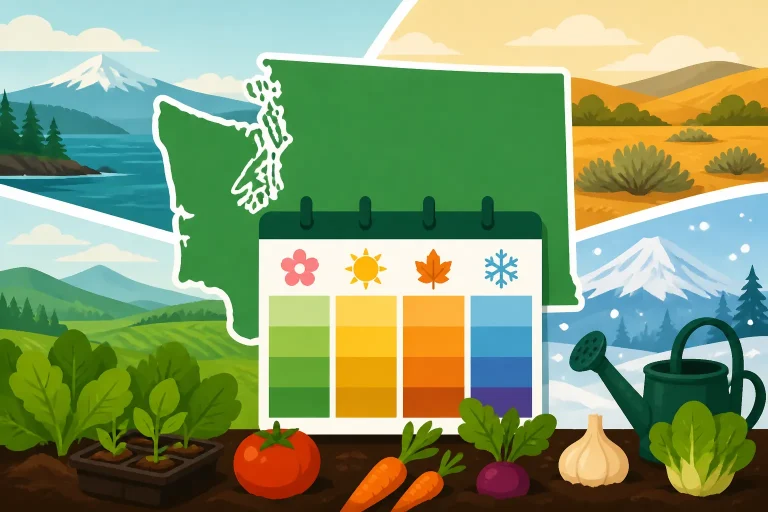
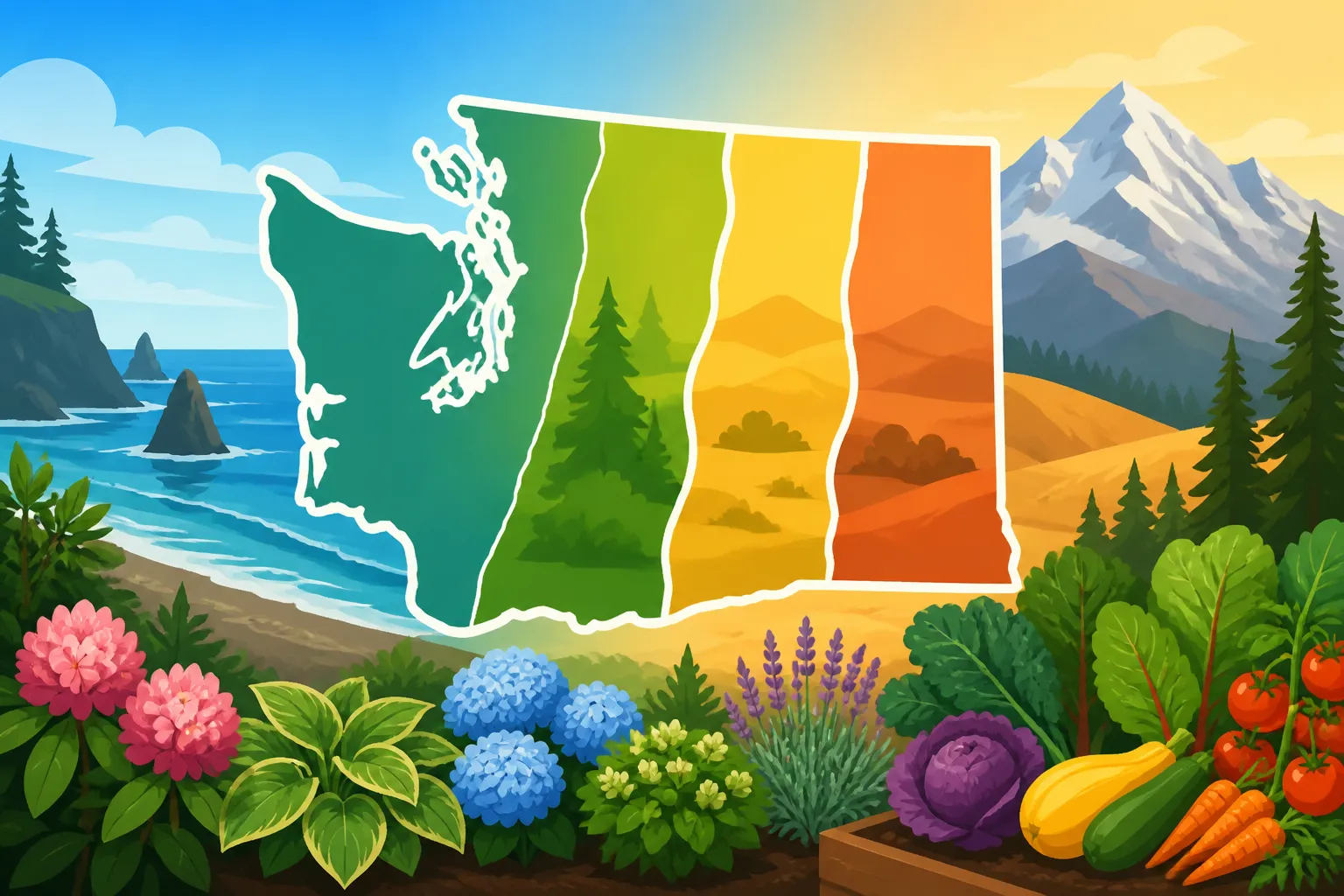
Washington’s geography makes a single statewide zone label a poor substitute for local observation. The Cascades divide the state’s broad climate patterns, and conditions can also change with elevation, distance from water, slope, and exposure. The coastal and maritime areas, inland valleys, dry plateaus, foothills, and mountain locations do not share one planting schedule.
That does not mean every garden within a broad region behaves alike. A sheltered yard can have milder winter conditions than an exposed site nearby. A low spot where cold air settles may be more vulnerable to frost than a raised or gently sloping bed. Walls, paving, tree cover, and wind exposure can also affect how a particular garden heats up and cools down.
These small-scale differences are often called microclimates. They can influence which plants succeed, but they do not change the fact that a map zone is a broad regional guide. A warm corner beside a building might help a heat-loving crop, while the same corner could expose a plant to reflected heat or leave it short of water. A sheltered bed can reduce wind stress, but shade from a nearby tree may limit sun for vegetables.
| Planning question | What the zone can help with | What to check locally |
|---|---|---|
| Is a perennial likely to survive winter? | Whether its stated hardiness is broadly compatible with the area | Wind exposure, drainage, shelter, and the plant’s health |
| When can tender vegetables go outside? | Little about the exact planting date | Frost outlook, soil warmth, and crop-specific guidance |
| Will a warm-season crop mature? | Not enough to decide by itself | Local season length, sunlight, and days to maturity on the seed packet |
| Is a yard warmer or colder than nearby areas? | A regional baseline for winter cold | Slope, low spots, walls, shade, and nearby structures |
| Which plant is best for a site? | A useful first filter for winter survival | Moisture, sun, soil, wind, and the plant’s other growing needs |
For regional timing, use the map alongside resources that account for the state’s different conditions. Washington Planting Schedules: East vs West of the Cascades helps frame the broad regional contrast, while Washington Planting Calendar: Seasonal Schedules by Region offers a calendar-oriented way to think about timing. Neither regional schedule replaces checking the conditions in your own yard.
How to look up a zone without overreading it
A map lookup can give you a useful starting estimate, but treat it as a regional clue rather than a precise reading of every garden. You can begin with Looking Up Your USDA Hardiness Zone Map in Washington or Finding Your USDA Growing Zone by ZIP Code in Washington. A ZIP code or map area can help identify the general zone associated with a location; it should not be treated as a measurement of the conditions in a specific bed.
After checking the map, compare the result with the plants you are considering. A plant label’s hardiness information concerns winter survival, so it is most relevant when selecting plants that remain outdoors through winter. For a vegetable seed packet, focus more on the crop’s seasonal needs and local planting recommendations than on a zone alone.
A practical way to use the map is to move through these questions:
- What kind of plant are you choosing? A long-lived tree or perennial needs to handle winter conditions over many years. An annual vegetable has a different planning problem: it needs enough suitable growing weather to produce a harvest.
- What does the label actually describe? Check whether it gives a hardiness range, a preferred exposure, moisture needs, or other growing requirements. Do not assume that a winter-survival rating guarantees strong growth.
- Where will it grow? Note whether the site is windy, shaded, exposed to afternoon sun, low-lying, or sheltered by a structure. These conditions may help explain why a plant does better or worse than the broad map suggests.
- What seasonal information is still missing? For vegetables and other frost-sensitive plants, check local freeze patterns and crop timing. Washington Freeze Dates and Growing Season Lengths provides another way to think about that part of the decision.
- What will you observe after planting? Keep notes about winter survival, spring growth, and how the site handles dry or wet weather. Your own observations help refine future choices without treating one season as a guarantee.
A map cannot resolve uncertainty at the level of a particular yard. If a plant is marginal for the listed conditions, you can reduce risk by choosing a more sheltered site, improving drainage where needed, or selecting a plant with a more suitable hardiness range. Those steps may improve the odds, but they do not promise success in every winter or every microclimate.
Use frost, soil, and plant needs to plan planting dates
Planting timing is a separate decision from winter hardiness. A frost-tolerant plant may cope with cool conditions better than a tender one, but that does not mean every crop should be planted as soon as the weather feels mild. Soil may remain cold and wet, or a warm spell may be followed by a return to chilly conditions. The timing also differs by crop: seeds, established transplants, and newly hardened-off starts may respond differently to the same weather.
For vegetables, start with crop-specific planting guidance rather than trying to translate a zone directly into a sowing date. Check what the crop needs for germination and growth, and compare those needs with your local conditions. If the packet gives days to maturity, treat that as planning information to consider alongside the season length, not as a promise of a particular harvest date.
Frost information is useful but should be handled as a probability, not a fixed appointment. A typical date does not guarantee that frost will happen then, or that cold cannot arrive earlier or later. Keep a watch on current forecasts when moving vulnerable plants outdoors, especially when a brief warm period tempts you to plant ahead of the weather.
For a season-by-season approach, Spring Planting Guide: Waiting for True Warmth in Washington can help distinguish a pleasant spell from conditions that are ready for planting. The broader calendar in Washington Planting Calendar: Seasonal Schedules by Region can help you think through regional differences, while your garden’s own soil and exposure tell you whether the moment is right.
Soil conditions deserve a check of their own. A bed that is saturated after rain may be difficult to work and can be a poor place for fragile starts, even if the air feels mild. Cold soil can also slow germination for crops that prefer warmth. A soil thermometer can provide more useful information than a hardiness zone when you are deciding whether the soil is ready for a particular seed.
When conditions are uncertain, stagger planting instead of committing the whole bed at once. A small initial sowing lets you see how it responds; later sowings can follow if conditions are favorable. This approach spreads the risk of a cold snap, slow germination, or an unexpected change in weather. For additional timing details, see Vegetable Planting Windows and Frost Safety Across Washington.
Match the plant to the site, not just the zone
A zone is one part of plant selection. Before buying or planting, consider the full site: sunlight, soil moisture, drainage, wind, and the space available as the plant matures. Two plants with similar winter hardiness can still have very different needs. One may prefer a sunny, well-drained bed, while another may need consistent moisture or protection from harsh exposure.
Sunlight is an especially useful filter for edible gardens. A spot that is bright in spring may become shaded when nearby trees leaf out. A bed that receives intense afternoon sun may dry faster than one in a more sheltered position. Check the site through the season rather than relying only on a quick glance at planting time. The article Sunlight Needs for Washington Vegetable Gardens and Beds can help you evaluate that part of the plan.
Drainage is another factor the zone cannot describe. Plants that are hardy enough for winter may still suffer if roots sit in waterlogged soil. Conversely, a drought-prone bed can put stress on plants during dry weather, even if they are well suited to the area’s winter cold. Observe how water moves through the yard and how quickly the soil dries after rain or irrigation. If a spot stays wet or dries very quickly, choose plants that suit those conditions or address the site before planting.
Use local observations to build a simple record. Note where frost lingers, which beds warm first, where wind dries the soil, and which areas stay shaded. Record what survives winter and how plants respond to spring conditions. This can help you distinguish a regional map result from the actual behavior of your own garden. A plant that struggles may be in the wrong site rather than the wrong zone.
For a closer look at yard-scale differences, see Spotting Warmer and Colder Microclimates Across Your Home Yard. If you are choosing plants for a small or unusual space, think about how containers, raised beds, walls, and overhead cover affect both temperature and moisture. These features may make a site easier to manage, but containers can also cool or dry more quickly than in-ground beds, so they need their own attention.
A useful decision order is to choose plants that suit the site first, then confirm that their winter hardiness is appropriate, and finally plan their planting around the season. For vegetables, reverse the emphasis: begin with the crop’s growth requirements and local planting window, then consider whether the bed and microclimate can support it. That keeps the zone in its proper role—as context, not a universal planting instruction.
Frequently Asked Questions
Does a Washington growing zone tell me when to plant vegetables?
No. A hardiness zone is most useful for considering winter survival of perennial plants. Vegetable planting dates depend on crop needs, soil conditions, frost risk, and the length of the local growing season.
Can two nearby gardens have different growing conditions?
Yes. Differences in slope, wind, shade, walls, drainage, and low spots can create warmer or colder conditions within a broad mapped area. Use the zone as a starting point, then observe the site itself.
Should I ignore a plant label if my yard has a warm microclimate?
Not necessarily. A sheltered spot may reduce exposure, but it does not guarantee that a plant will survive. Consider the plant’s hardiness and its other needs, and be cautious when it is marginal for local winter conditions.
What should I use alongside a zone map?
Use local planting calendars, frost information, crop-specific guidance, and observations of your soil and yard. For vegetables, the crop’s seasonal needs generally matter more than the zone alone.
Disclaimer
This article is for general informational purposes only and does not constitute professional advice. Laws, prices and regulations vary by location and change over time. Consult a qualified professional for guidance on your specific situation. Washington Gardening Guide is not a government agency and is not affiliated with any university extension, state department of agriculture or other government agency.